Fitz Roy Trail Conditions: How Hard Is the Hike Really?
A realistic guide to the Laguna de los Tres hike — including the Fitz Roy trail conditions, difficulty, and what to expect along the way.
The Fitz Roy trail conditions vary significantly along the hike to Laguna de los Tres. While the lower sections are wide and well maintained, the final ascent is steep, rocky, and physically demanding.
If you’re planning the Mount Fitz Roy hike from El Chaltén, understanding the terrain in advance is essential. In this guide, we break down exactly what to expect on each section of the trail — including maintenance, steep areas, and how weather conditions can affect safety.
For a deeper look at what the terrain really feels like, check our detailed overview of the Fitz Roy trail conditions.

Why Trail Conditions Matter on the Fitz Roy Hike
Although the Fitz Roy trail is one of the most popular hikes in Patagonia, conditions are not uniform throughout the route. The terrain changes multiple times, and weather in southern Argentina can shift quickly.
For this reason, knowing the trail conditions beforehand helps you:
- Choose the right footwear
- Pack appropriate gear
- Prepare mentally for the final ascent
- Avoid unnecessary risks
Preparation is especially important because the final section remains rugged and natural rather than artificially reinforced.
Overview of Mount Fitz Roy Hiking Trails
The Mount Fitz Roy hike from El Chaltén follows clearly marked trails within Los Glaciares National Park. Overall, the route is well established and easy to follow.
However, hikers should expect a mix of:
- Packed dirt paths
- Forest trails
- Gravel sections
- Rocky inclines
- Steep switchbacks
Most of the hike feels comfortable and accessible. Nevertheless, certain sections require careful footing, particularly near the summit viewpoint.
For detailed trail statistics and planning information, visit our complete guide to hiking Mount Fitz Roy from El Chaltén.
Fitz Roy Trail Conditions by Section
El Chaltén to Campamento Poincenot – Trail Condition
The first section of the trail is in very good condition. The path is wide, clearly signposted, and mostly consists of packed dirt and forest terrain.
In dry weather, this portion feels relatively easy. Even hikers with moderate experience should find it manageable.
Because this part of the trail is well maintained, footing is stable and predictable. As a result, most hikers conserve energy for the final climb.
Poincenot to Laguna de los Tres – Steep & Rocky Section
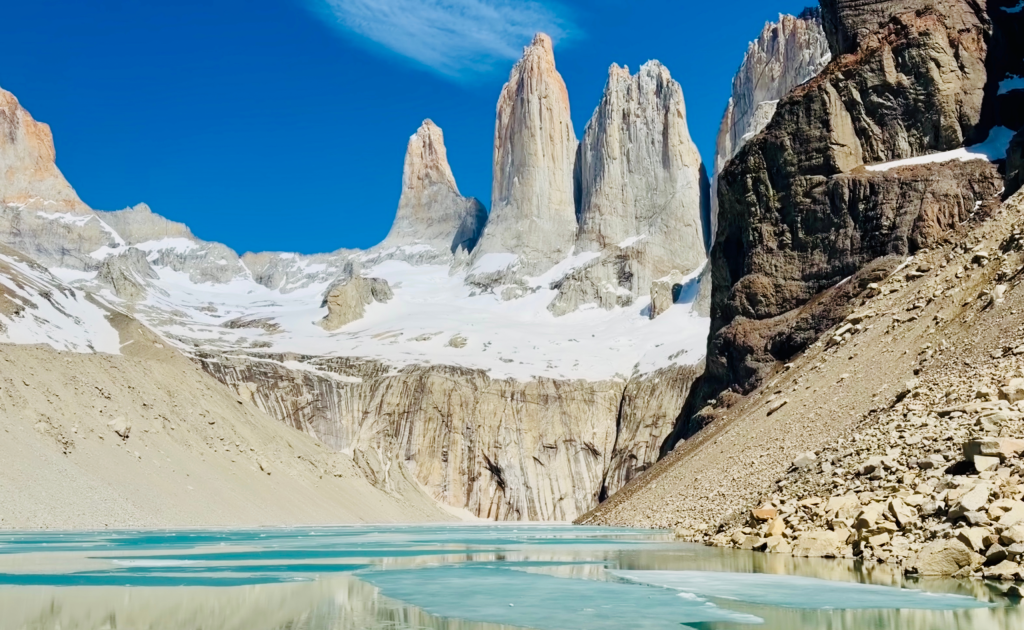
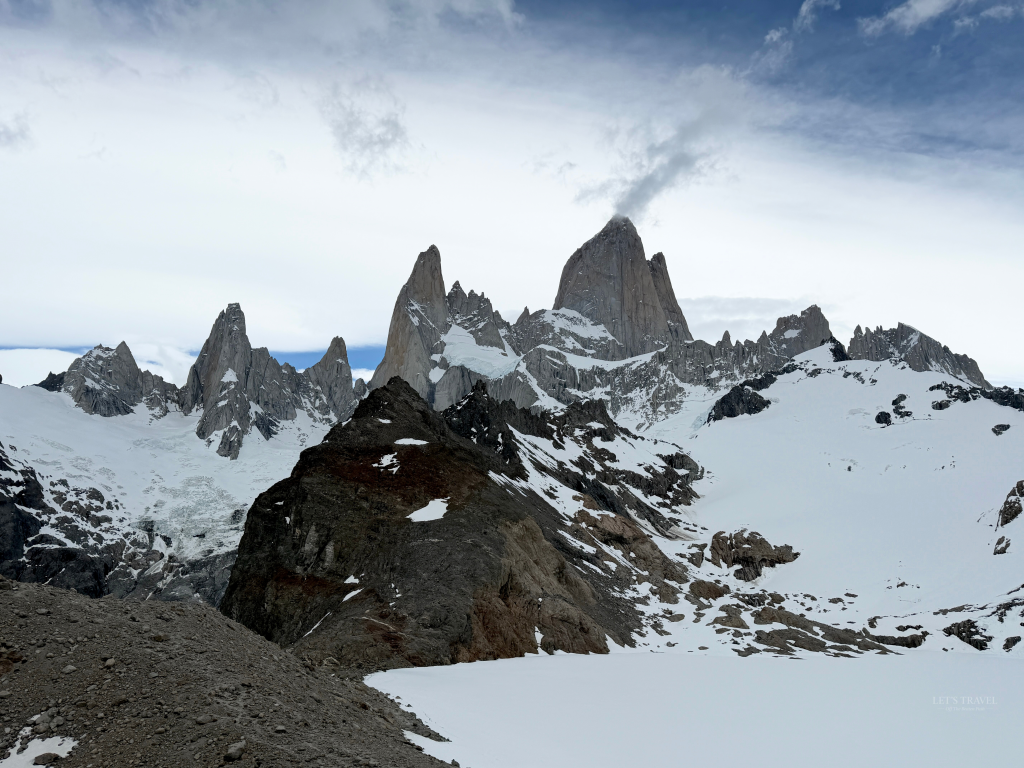
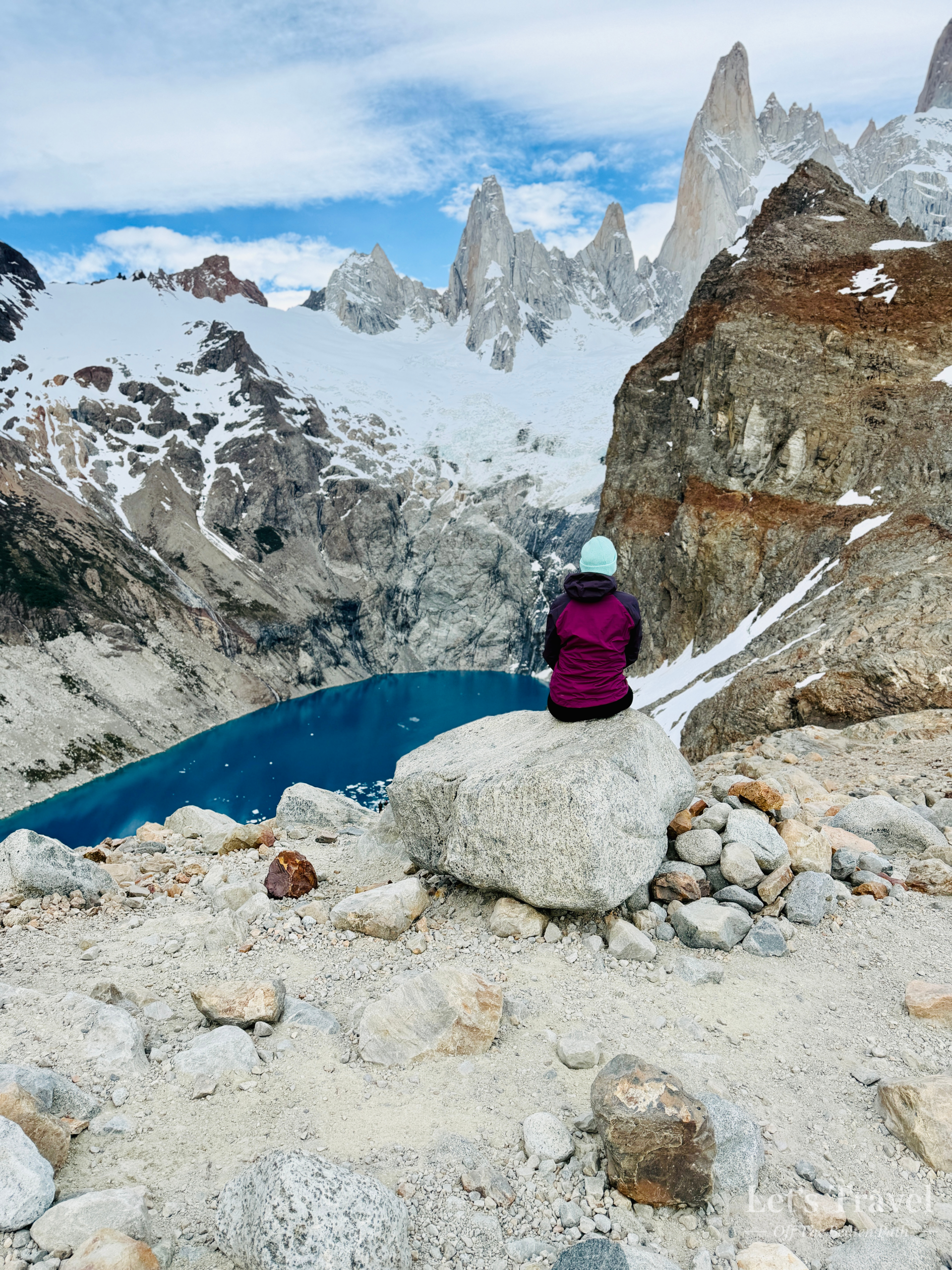
The final ascent from Campamento Poincenot to Laguna de los Tres is where trail conditions change dramatically.
This section is:
- Steep
- Narrow
- Covered in loose gravel
- Exposed to wind
In addition, the incline is relentless for nearly one kilometer. Loose rocks can shift underfoot, especially when descending.
For this reason, many people use trekking poles since they provide stability and reduce strain on your knees during the descent. However, we hiked without hiking poles and had no difficulties during the whole trail.

Is the Fitz Roy Trail Well Maintained?
Yes, overall the Fitz Roy hiking trail is well maintained.
Park authorities regularly check signage and trail markings. Erosion is managed where possible, particularly in high-traffic areas.
However, the final ascent remains intentionally rugged. Unlike heavily engineered mountain trails, this section preserves its natural character. Consequently, hikers must rely on stable footwear and proper balance rather than constructed steps.
Trail Conditions in Different Weather
Weather has a significant impact on the Mount Fitz Roy trail conditions.
Trail conditions change significantly depending on when you hike — from dry and dusty paths in summer to snow-covered sections in shoulder seasons.
Fitz Roy Trail Condition in Dry Weather
In stable and dry weather, the trail is generally in excellent condition. Visibility is clear, and the packed dirt sections are easy to walk on.
Although the final rocky ascent remains physically demanding, it is considerably safer when dry.
Fitz Roy Trail Condition After Rain or Wind
After rainfall, the trail can become muddy and slippery. This is particularly true on the final climb to Laguna de los Tres.
Loose gravel shifts more easily when wet. As a result, the risk of slipping increases significantly.
Strong Patagonian winds also affect the exposed upper section. In extreme conditions, gusts can make balance more difficult.
Therefore, always check the weather forecast before starting your hike.
If you’re still deciding when to go, we have broken down the best time to hike Mount Fitz Roy in detail.

What to Know Before You Go
To safely manage varying trail conditions, keep the following in mind:
- Wear sturdy hiking boots with good grip
- Choose shoes with ankle support
- Consider trekking poles for the final ascent
- Check wind and weather forecasts
- Start early to avoid crowds and unstable afternoon weather
Being properly prepared makes a substantial difference when hiking Mount Fitz Roy.
FAQ – Fitz Roy Trail Conditions
Is the Fitz Roy trail slippery?
It can be, especially after rain. The final ascent to Laguna de los Tres becomes muddy and unstable when wet.
Is the trail exposed?
Yes. The upper section is exposed to wind and open terrain, which can feel intense during strong gusts.
Are hiking poles necessary?
They are not mandatory, but they are highly recommended for stability on the steep and rocky final climb.
Do trail conditions change throughout the year?
Yes. Conditions vary depending on weather, season, and foot traffic. The most stable conditions are typically between October and April.
Final Thoughts on Fitz Roy Trail Conditions
The Mount Fitz Roy trail conditions are generally very good on the lower sections of the hike. The path is wide, clearly marked, and accessible for most hikers.
However, the final ascent to Laguna de los Tres is steep, rugged, and physically demanding. Proper footwear, awareness of weather conditions, and steady pacing are essential.
By understanding the trail conditions in advance, you can approach the hike confidently and fully enjoy one of Patagonia’s most spectacular landscapes.